Quality Fence Builders You Can Rely On
Install a code‑compliant fence in Sycamore completed properly from day one. Our qualified specialists take care of all necessary permits, HOA documentation, utility marking (811), and boundary confirmation. We design the layout, install posts at proper depth, ensure rail alignment, and mount gates correctly. Choose from multiple fencing options like wood, composite, vinyl, ornamental metal, or chain link-matched with durable metal hardware and guaranteed finish options. Expect precise measurements, drainage planning, inspections, and a written timeline and warranty. Find out how different materials, styles, and installation schedules suit your location.
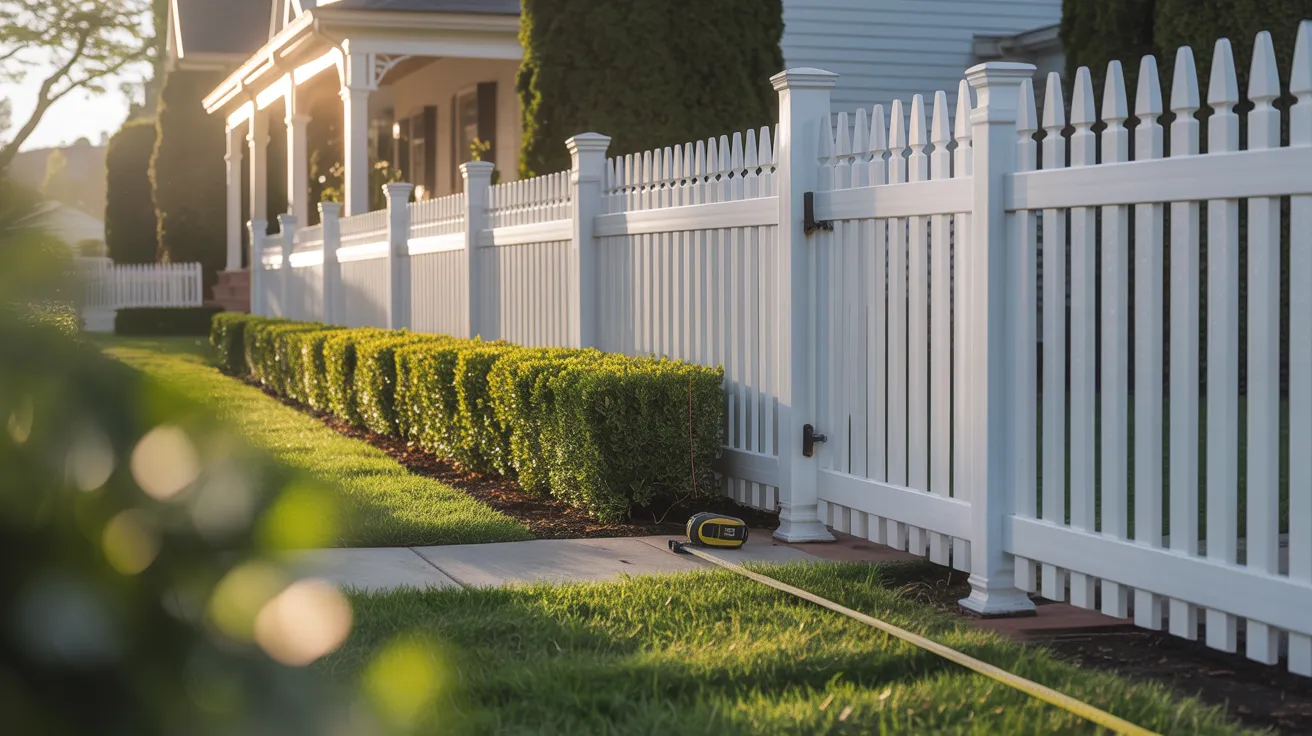
Key Takeaways
- Local, licensed fence specialists in Sycamore managing all necessary permits, approvals, and inspections with verified property line and utility clearances.
- Complimentary on-site evaluations, highly accurate layout planning, and scaled site plans for setbacks, drainage, gates, and slopes.
- Professional installation: posts set to frost depth, including accurate alignment, rust-resistant hardware, and foundation footings contoured for drainage.
- Material choices available consisting of cedar/PT wood, composite, vinyl, chain link, and ornamental metal offering proper height requirements, pool safety spacing, and warranty coverage.
- Detailed timelines and warranties; care programs incorporate yearly hardware inspections, surface refinishing, and drainage improvements.
Professional Fence Installation in Sycamore: Why It Matters
Launch with specialized experience that avoids costly mistakes: professional fence installers in Sycamore are familiar with ground composition, property lines, and municipal codes, guaranteeing your fence meets setback, height, and visibility requirements the first time. You'll avoid survey disputes, boundary violations, and correction orders because licensed crews verify boundaries, call in utility locates, and document approvals. Their technical know-how determines proper installation specifications and gate clearances that stay compliant and durable.
Additionally, you'll gain liability protection. Reliable contractors have general liability and workers' compensation, protecting you from injury claims and property damage. They utilize code-approved fasteners, rust-resistant components, and proper safety protocols, while furnishing written warranties and as-built records. With precise installation, vertical alignment, and correct tightening, your fence functions as intended and meets all inspection requirements.
Fence Materials and Styles for Homes and Businesses
After handling the permitting and layout correctly, you can focus on picking fence styles and materials that comply with Sycamore's performance, maintenance, and code requirements. For low maintenance, select recycled composite panels; they guard against rot, insects, and warping while conforming to height and setback standards. Wood delivers warmth but requires sealing; treated pine or cedar works best with code-appropriate post depth and fasteners. Chain link offers cost-effective security; incorporate privacy screens where permitted to improve opacity without exceeding height limits. Ornamental metal (steel or aluminum) provides durable, pool-compliant options with code-specified picket spacing. Vinyl remains stable, cleanable, and suitable for residential boundaries. Bamboo fencing can work as a decorative screen; confirm local allowances for wind load and decay resistance. Be sure to verify gate hardware, visibility, and clearance requirements.
Bespoke Design: Tailoring to Your Property's Architecture and Specifications
You should align the fence profile to match your home's architectural design to create a harmonious appearance and adhere to local design guidelines. Choose materials and finishes that complement existing components, fulfill durability requirements, and comply with code and HOA specifications. Plan gate locations, sight paths, and spacing to maximize security and access while complying with height requirements, boundary requirements, and clearance guidelines.
Aligning Architectural Styles
Even though height requirements, setbacks, and materials should follow local regulations, achieving the best results comes from harmonizing the design with your property's architecture and functional needs. Start by determining your home's architectural style-Colonial, Craftsman, Contemporary, or Mid‑Century-and reflect its patterns, proportions, and elements in the fencing design and post placement. For heritage conservation areas, follow approved guidelines, preserve important viewlines, and document any proposed visual contrast to demonstrate harmonious integration.
Match upper elements to roofline slopes and porch details, maintain gate spacing fits walkway geometry, and proportion posts to facade massing. Preserve transparency adjacent to primary elevations to safeguard streetscape character and sight triangles. Incorporate corner returns, datum lines, and trim profiles for consistency. Confirm setbacks, sight-distance specifications, and easements before layout to guarantee compliant, cohesive alignment.
Material and Finish Selections
The choice of materials and finishes greatly affects strength and integration more than any other factor. Pick components that meet code requirements, climate conditions, and maintenance needs. Budget-friendly pressure-treated pine works well and bonds well with stains; natural cedar and redwood contain built-in oils and excellent weather resistance. For superior strength, opt Sycamore Fence Installation for steel or aluminum with powder coating with AAMA-compliant finishes; in maritime environments, use seaworthy metal grades. Vinyl delivers consistent color and minimal maintenance but needs UV-protected compounds.
Match finishes with surrounding elements and modern color patterns while maintaining durability. Use deep-penetrating finishes on wood to minimize flaking; choose eco-conscious solutions when necessary. For metals, require protective metal underlayments under powder coating. Confirm hardware: rust-proof connectors, appropriate mounting hardware, and dielectric separation to prevent galvanic corrosion. Secure finish warranties and maintenance intervals through documentation.
Efficient Space Planning
Before planning fence boundaries, start by establishing different zone purposes and check against building codes and site restrictions. Map out main entry areas, vehicle paths, and service zones to ensure proper circulation. Establish zones for private areas, animal containment, pool areas, and planting spaces, then determine gate dimensions to enable maintenance equipment and emergency access. Locate gates carefully to preserve accessibility to utility meters, shutoff valves, and easements; never impede legal access paths.
Verify fence details against local regulations and homeowner association guidelines regarding elevation, transparency, and placement. Preserve required intersection visibility clearance and ensure proper drainage pathways to stop water from collecting near foundations. Arrange posts in relation to ground conditions and building attachment locations to ensure structural integrity. Use heavy-duty components for frequently used gates. Configure lights and gate hardware to satisfy security requirements, particularly for pool enclosures. Document all dimensions on a detailed site plan.
Permits, Building Codes, and Property Boundaries
Before proceeding with your fence construction, you must verify zoning regulations, permits, and building codes before setting posts. Secure written permission for height, material, and placement, and validate zoning setbacks for streets, alleys, and easements. Review homeowner association rules if relevant. Contact 811 and record utility clearances before excavation; many jurisdictions require proof. Perform survey verification to confirm the deeded property line; don't rely on old fences or assumptions. If property markers are absent, hire a certified land surveyor.
Adhere to sight-triangle requirements at corners and meet pool safety standards and wildlife protection rules where needed. Get neighbor approval when constructing near shared lot lines; formal approval minimizes conflicts. Maintain approval documents on-site and arrange required inspections as needed. Save all documentation-including permits, surveys, and correspondence-for compliance records.
Site Analysis, Measurements, and Project Organization
Begin by evaluating the property layout, documenting grade changes, utilities, easements, and required setbacks to confirm compliant fence placement. Establish accurate measurement protocols: create control lines, place benchmarks, calculate center-to-center post spacing, and record offsets for gates and corners. Log all dimensions and constraints in a site plan to inform material takeoffs, cut lists, and a regulation-compliant installation process.
Property Layout Assessment
While the fence design and materials are crucial, your project's success depends on a comprehensive site assessment. Initially confirming property boundaries against recent survey documents and recorded easements; designate setbacks per local regulations. Mark utilities via 811 and note overhead clearances. Conduct a vegetation analysis to spot trees, roots, and invasive species that might interfere with post locations or long-term stability. Execute drainage analysis to track slope, low points, and discharge paths so fence lines won't trap water or weaken footings. Record driveway aprons, ADA routes, gates' swing arcs, and required sight triangles at streets. Catalog soil classifications and frost depth to inform footing design. List surface improvements-retaining walls, patios, irrigation-so alignment stays code-compliant and constructible.
Measurement Accuracy Guidelines
Once confirming the site constraints, set up a fixed baseline and datum, then record distances from control points to prevent cumulative error. Install benchmark nails or stakes located outside excavation limits. Verify property corners with survey equipment and reconcile any deed, plat, or GIS discrepancies. Complete laser calibration before layout; check instrument level and adjust for slope. Use stretched measuring tapes or utilize a total station to set fence lines, offsets, and gate clearances. Document horizontal and vertical data, including post height measurements, drainage fall, and utility separations per code. Indicate post centers at specified spacing, adapting for corner, end, and gate posts. Cross-check diagonals to ensure squareness. Record tolerances, required clearances, and obstructions. Maintain all control points until concrete cures and final inspection.
Installation Guide: Post Setting Through Final Completion
Start with accurate layout and code inspection, where you'll set corners, extend your lines, and mark post centers at code-approved spacing. Excavate to frost depth, flare the base when necessary, and secure posts in 5:1 gravel-concrete mix, angled for water flow. Check plumb and post alignment with a level and tensioned line; support until cure. Attach rails per manufacturer span specifications, pilot hole fasteners, and ensure consistent reveal at gates and terminations. Place panels or boards with uniform gaps and corrosion-resistant hardware. Adapt top line for grade, then size posts to specified height. Seal or flash posts where required. Smooth exposed cuts, treat end grain, and apply finish selection to match local guidelines. Conduct a final inspection, verifying clearances, fastener torque, and code compliance.
Durability, Maintenance, and Warranty Details
Although aesthetics matter, long-term durability is determined by material choices, protective finishes, and maintenance intervals. Select species and composites rated for weather resistance, then pair them with galvanized or stainless hardware to eliminate corrosive damage. Specify concrete footings beneath the frost line and apply ultraviolet-protective sealants according to manufacturer guidelines. If you prefer eco materials, opt for Forest Stewardship Council certified timber or eco-friendly composites that meet local regulations and fire safety standards.
Conduct annual checks to secure all fasteners, prevent ground contact, and refresh coatings as required. Maintain good drainage to prevent moisture absorption. Promptly replace any damaged pickets and damaged top pieces to avoid spreading damage.
Examine warranty conditions in written form. Look for multi-year coverage for components, hardware, and labor, with clear limitations, ability to transfer, and service conditions to ensure warranty remains active.
Get a Local Quote and Timeline for Your Fence Project
Get a detailed pricing by obtaining detailed proposals from insured, licensed fence professionals in your area, outlining fence type, elevation, running feet, gate requirements, and terrain specifications. Have each bidder to confirm utility markings, property line verification, and code requirements. Ask for a written timeline schedule detailing mobilization, post placement, concrete drying, panel assembly, and inspection scheduling.
Verify who is responsible for local permits, HOA approvals, and inspection scheduling. Provide information about soil composition, tree root locations, slope characteristics, and access constraints so teams can precisely estimate equipment and labor costs. Ask for individual costs for debris removal, bedrock drilling, high-grade concrete, and gate hardware components. Compare and analyze workmanship warranties and material specifications by product code. Set progress benchmarks with payment terms connected with inspections. Secure project dates in writing, with weather allowances and change-order parameters clearly outlined.
Popular Questions
How Do Seasonal Weather Patterns in Sycamore Affect Installation Timing
Seasonal weather patterns in Sycamore directly influences installation scheduling. Installation teams skip winter construction periods to minimize freeze-thaw cycles affecting post stability and foundation hardening. Best scheduling windows are spring's end or fall's beginning for balanced soil moisture and reliable weather. Installation timing considers wet weather patterns to maintain trench stability and structural integrity. In peak allergen periods, protective measures shield coating applications, while following construction standards for frost depth requirements, water management specs, and placement verification to guarantee durability.
Is Gate Integration Possible With Smart Locks and Access Control Systems?
Absolutely. It's possible to combine gates with comprehensive access control and smart lock solutions. We support smart entry with RFID, keypad integration, Wi‑Fi controllers, and Bluetooth. We'll select secure enclosures, weather‑rated hardware, and UL‑listed power supplies. We coordinate low‑voltage wiring, conduit, grounding, and surge protection to satisfy NEC and local requirements. You'll receive schedules, app control, remote overrides, and audit logs. We also set up fail‑secure/fail‑safe as required by fire and egress regulations.
What Are the Available Payment Plans for Your Fence Installation?
Choose between fixed terms, interest-free promotional offers, and deferred payment plans pending qualification. We provide phase-based invoicing to align with your project progress. You can expect clear documentation with all costs clearly stated and code-compliant paperwork. We support you in financial planning, including product options and project adjustments to stay within cost targets. Process transactions through bank transfer, credit card, or check payment. Contact us regarding early-pay savings and extended terms for bigger installations.
What About Removing and Recycling Old Fencing?
We manage environmentally responsible removal of old fencing. We frequently hear from customers the day their new fence arrives, concerned with material disposal. You won't have to be. We safely dismantle posts, rails, and footings, separate metals, wood, and composites, and send them to certified recyclers or compliant landfills. We seal concrete bases, follow local code, supply disposal documentation, and ensure a tidy workspace. You approve the plan; we handle the removal.
Are HOA Approval Support Services Available, Including Drawings and Documentation?
Absolutely, you get full HOA approval support. We provide homeowner association consultations, prepare detailed plans, technical details, and material data, and assemble required forms. We handle permit applications in parallel, verifying setbacks, height limits, and visibility standards meet code and HOA covenants. You receive certified drawings when needed, image mockups, and prompt revisions. We process packets, track reviews, address comments, and obtain final approvals so you can schedule installation without delays.
Concluding Remarks
Some folks try to DIY the boundary measurements, avoid the permit process, and wind up with a fence that leans at odd angles. Alternatively, trust experts to take care of all technical requirements and approved materials, guaranteeing your installation is precise and your neighbors stay happy. We'll ensure seamless integration with your property, full code compliance, and expert installation considering everything from foundation stability to material durability. You'll receive a thorough final review, clear schedule, and an impeccable installation that's correctly installed, documented, and pristine.